Practice 02
AI Systems Integrator
Most of what fills a broker's week — pulling comps, building aerials, drafting the OM, chasing the paperwork — can now be done in a fraction of the time. I know because I rebuilt my own practice around it, then built the tooling for three other businesses the same way. I do the work myself: no agency, no team handed your project after the pitch. It gets built in your accounts, on your deals, and your people are taught to run it.
What I set up
Research & underwriting
Comparable sales, rent rolls, demographics and site screening pulled together and modeled in hours rather than days — with a repeatable process your team can rerun on the next deal.
Mapping & marketing
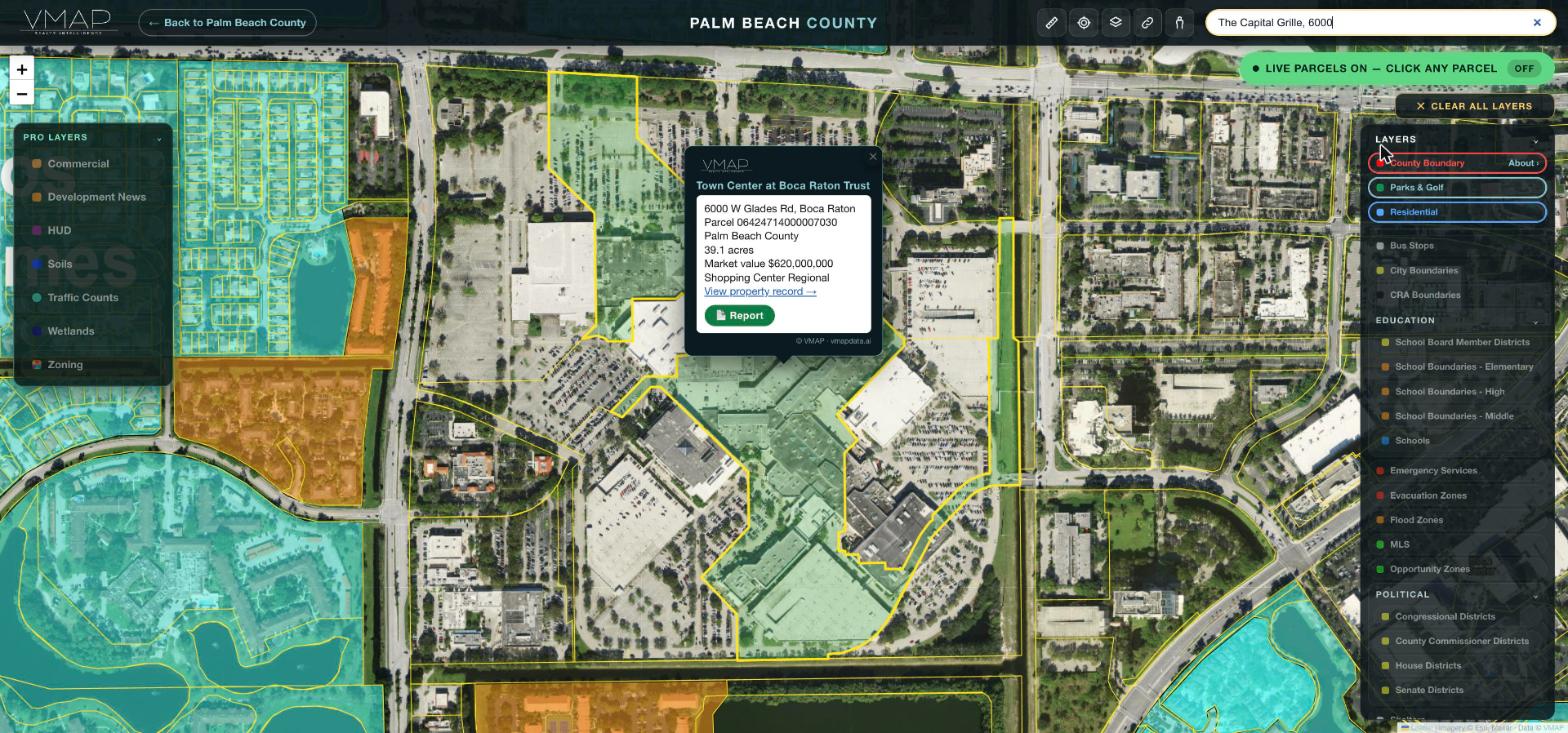
Annotated aerials, project maps, offering memoranda, listing pages and social posts produced in-house to a professional standard — the kind of material that used to go out to a designer.
Documents & follow-up
LOIs, lease abstracts, proposals, client updates and the email that follows every showing, drafted from your own templates and in your own voice — reviewed by you, not written by you.
Contacts & prospecting
Your database cleaned, enriched and segmented, with outreach that reads like you wrote it. Prospect lists built from public records instead of bought.
A website that works
Listings, track record and contact flow on a site you can update yourself. This one was built that way — it is the demonstration.
Training your team
Hands-on sessions with your own files and your own deals, so the tools get used after I leave. No slide decks about the future of AI.
How this is different
I don't sell AI. I use it every day, on real deals, and I build the tools myself.
- Four decades of listings, leases and closings — I know which steps matter and which are ceremony
- Every workflow I install is one I run in my own business first
- The person you meet is the person who does the build and the training. Nothing is outsourced, not the code, not the data work, not the writing
- Calls, texts and emails answered within 24 hours, by me — no ticket queue, no account manager
- Built in your accounts, on your own keys. If we stop working together, nothing turns off
- Infrastructure — hosting, data, API usage — billed to you directly at cost, never marked up
- Fixed scope, fixed price, fixed date. Scope is counted — workflows, integrations, data sources, trained people — never hours
- Small changes are free, two per phase. Anything bigger is a one-page change order, priced and signed before work starts
The part that is actually hard
Anyone can scrape a page. The work is making sure it's right.
Nothing throws an error
A catalogue page that kept advertising a layer count that went stale months ago. A county page cloned from an old template that shipped with the paid layers unlocked. A video queued to post from a file that was not where it needed to be. None of it errored. All of it was caught by a check written in advance — forty of them run before a VMAP county ships. I build the checks before the features.
Wrong data is worse than no data
An approach to the wrong company is worse than no approach at all. At IBA, every uncertain attribution was challenged before it was written: a developer credited as the architect, a firm with a near-identical name in another state, projects credited to a dead scheme at the same address. Five records were left blank rather than guessed. Change the object — a seller's add-backs, the exceptions on a title commitment, an escalation clause on page nine of a lease — and the same pass applies.
Where it isn't automated, I say so
One of the platforms VMAP posts to is still done by hand, because the automated route needs a review I have not finished. I would rather tell you than let you assume. Private data stays out of public products by design — my own commercial comps are deliberately excluded from VMAP. Deciding what must never ship is part of the build, not an afterthought.
Straight answers
Do I need to replace my CRM?
No. It gets built around what you already run — your CRM, your email, Drive or SharePoint, the spreadsheets people actually use. CRM replacement is written into the exclusions of every proposal.
Whose accounts does it run on?
Yours. API keys, hosting and subscriptions are opened in your name and billed to you at cost. There is nothing of mine to switch off.
What happens if we stop working together?
It keeps running. You get the documentation, the runbook and the credential inventory at handoff. The monthly agreement buys upkeep and new work, not access to your own system.
How big does my business need to be?
The work suits owner-run firms of roughly five to fifty people — big enough to have recurring paperwork, too specific for off-the-shelf software, and too small for the large consultancies to bother with.
Will my staff actually use it?
That is what week two is for. The first thing shipped is the one that removes the worst part of somebody's day, and it is in a real person's hands by day ten. Training happens on live work, in the room, by role.
Why not bill by the hour?
Hourly turns speed into a pay cut and makes you count minutes instead of calling with the good question. I price it the way a good contractor bids a job: fixed scope, fixed price, fixed date. Overruns are my cost.
Start with a deal, not a demo.
A first conversation costs nothing. Bring a property you are working on and I will pull it up on the live map while we talk. If it makes sense from there, two weeks and $4,500 buys a written answer to whether there is anything in your operation worth building.